Away / seasons
Holidays without the all-or-nothing spiral
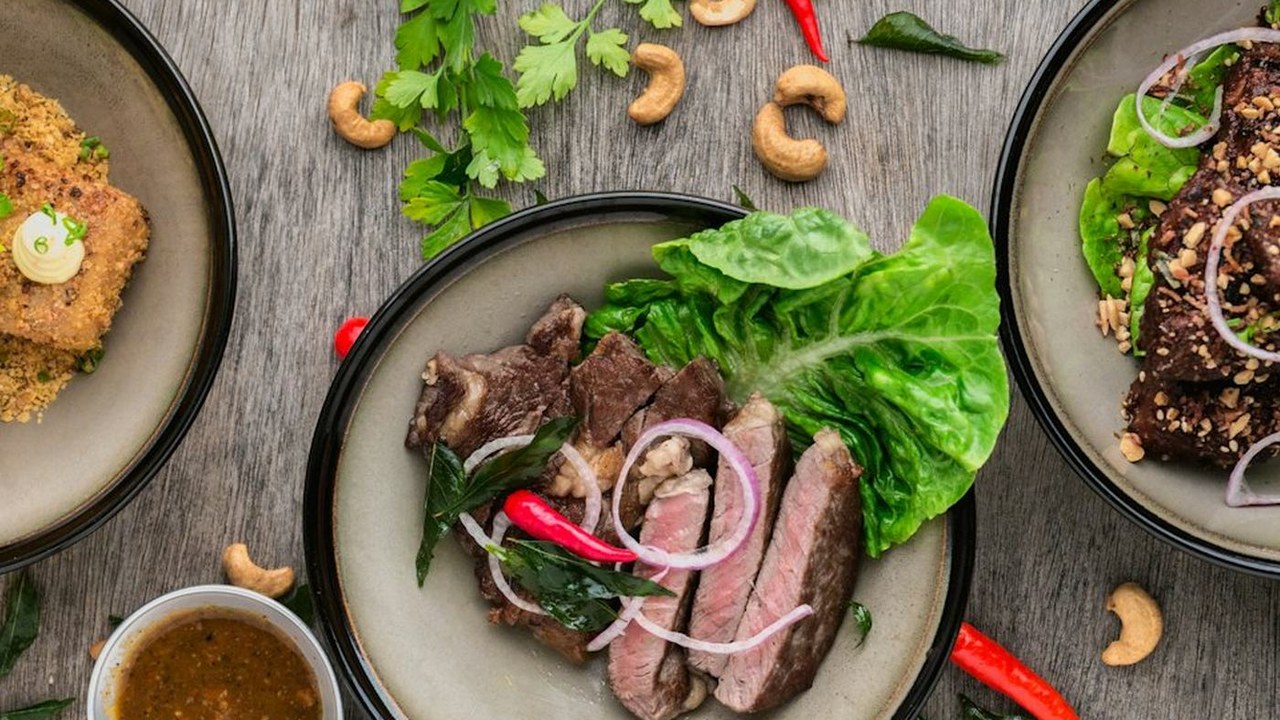
Holidays can bring good food, family dynamics, and a lot of opinions about what’s on your plate, and it’s okay if that mix feels like more than just a meal.
Holiday eating advice often arrives as a warning: earn the meal, fill up on vegetables first, skip the bread, and schedule a penance for the next morning. That script turns a table you may have looked forward to all year into a test. The spiral usually starts after, in the story that you “ruined it” and might as well keep going until January.
A special meal can be the plan, not the exception you have to pay for.
This is general education from our registered dietitian team. It is not a detox, a drinking plan, or medical nutrition therapy. Diabetes medicines, pregnancy, recovery from an eating disorder, and alcohol-use concerns need your own clinician. If those are in the picture, a festive article is optional reading—not instructions.
Plan for the meal you actually care about
Decide which eating is the point. The holiday dinner, the brunch, the cookies someone makes once a year. Let that meal be full-sized. You do not have to arrive starving to “make it worth it,” and you do not have to graze all afternoon so that dinner feels less official.
- Eat a normal earlier meal or a real snack with protein, so you sit down hungry but not shaky. The afternoon bridge is that snack if the main event is at night.
- Include what you want, including dessert, as part of the meal rather than as a verdict you deliver in the kitchen later.
- A protein and a plant on the plate still help you feel finished. They are not a tax you pay before the foods you love. Take both.
- If you are the host, feed yourself too. Cooking all day on coffee is how the evening becomes irritable grazing.
Eating out uses the same exit: pleasure included, and the next meal is an ordinary meal. A banquet is a long restaurant night. It is not a new identity.
Leftovers are meals, not evidence
Pie for breakfast once is a holiday. Pie as the only food for four days, because you decided the week is already “off,” is the spiral. Leftovers can be lunch: turkey or beans in a sandwich, roasted vegetables with eggs, soup from the ham bone if that is your kitchen. That is thrift and convenience.
- Put one or two leftover meals on purpose, then let the rest of the week look like weeknight dinners again.
- You do not have to finish food so it “doesn’t go to waste” past the point of comfort. Freeze it, send it home with someone, or throw it out. Fullness is not a moral waste.
- A Monday anchor—a protein-aware first meal, a short walk if you like walks—is enough structure. Weekend anchors were written for the “I have to start over” feeling. January is not a personality replacement.
Travel days
Airports, long drives, and other people’s kitchens are when good intentions evaporate. Pack one thing you know you will eat: nuts, cheese, a sandwich, fruit, yogurt if you can keep it cold. Eat it before you are so hungry that the only option feels like a crisis.
- Gas-station and airport food can include milk, a sandwich, or nuts. It does not have to be a salad you will not enjoy.
- Say yes to the relative’s meal without narrating your goals at the table. Boundaries about bodies and diets are a kindness. You can change the subject.
- Time zones and missed sleep make appetite louder. That is biology. Sleep, stress, and appetite applies to red-eye flights as much as to workweeks. Eat, then sleep if you can. Do not fast to “reset the clock.”
Alcohol, without a second project
Drinks are part of many holidays. They are not required, and they are not a health food. Alcohol adds energy that is easy to forget, loosens food decisions, and often worsens sleep—which makes the next day hungrier. If you drink, food already on board and water nearby is the educational default. A normal breakfast beats a punitive juice.
We will not invent a safe number of drinks. The longer frame is alcohol, caffeine, and “is this fine?”. If stopping is harder than you want it to be, or a condition or medicine makes alcohol a problem, talk with a clinician. A holiday guide is not a treatment for that.
Hard feelings at family tables are also real. Comfort food can be part of coping. The spiral is the shame afterward, not the cookie. Stress and emotional eating is the companion piece: the next meal stays normal.
A short “good enough” check
- The special meal was allowed to be special, without a morning of earning it.
- I ate something earlier so I did not arrive shaky—or I noticed I didn’t, and I did not turn that into a verdict.
- Leftovers became a meal or two, not a story that the whole week is cancelled.
- Travel included one packed snack, even an ordinary one.
- Alcohol, if I drank, had food nearby, and the next morning was breakfast—not a cleanse.
- Nobody at the table needed my commentary on their plate, including me.
If you can tick most of those, the holiday stayed inside a life. It will not look like a magazine. It will be easier to return from.
Sources
- Centers for Disease Control and Prevention (CDC). About Moderate Alcohol Use. https://www.cdc.gov/alcohol/about-alcohol-use/moderate-alcohol-use.html
- FoodSafety.gov. 4 Steps to Food Safety. https://www.foodsafety.gov/keep-food-safe/4-steps-to-food-safety
- U.S. Department of Agriculture & U.S. Department of Health and Human Services. Dietary Guidelines for Americans, 2025–2030 (January 2026). https://cdn.realfood.gov/DGA.pdf
- USDA Food Safety and Inspection Service (FSIS). Leftovers and Food Safety. https://www.fsis.usda.gov/food-safety/safe-food-handling-and-preparation/food-safety-basics/leftovers-and-food-safety
Wherever you are with the holidays, small steps count. If you’d like a hand, tell our RD team what’s going on, or join the newsletter to keep learning with us.