Kitchen
Meal prep that doesn’t take Sunday hostage
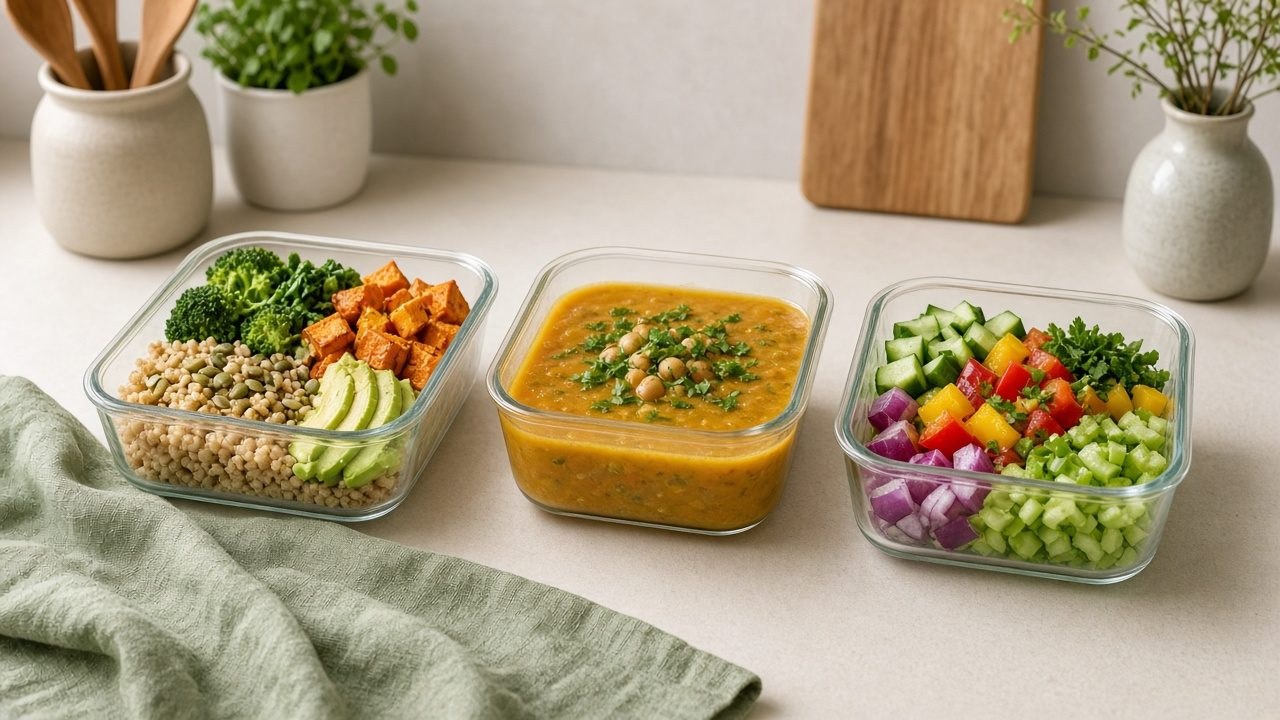
If meal prep sounds like an entire Sunday you don’t have, you’re not doing it wrong, and the all-day version isn’t the only kind.
Meal prep has a public image: four hours, twenty identical containers, a playlist, and a personality. Then Wednesday arrives, you do not want that chicken, and the project becomes evidence that you cannot stick to anything. The useful version is smaller. You cook one thing you will actually eat again, and you stop.
The useful version of meal prep is smaller.
This page is general education from our registered dietitian team. It is not a weekly menu, a calorie plan, or medical nutrition therapy. If you are pregnant, feeding someone with a compromised immune system, or cooking for an infant, be stricter about storage than a general kitchen note, and follow the clinician or health guidance that already applies.
Prep is a tool, not a personality
The point of prep is fewer decisions on the nights you are tired. It is not a moral schedule, and it is not how you earn the right to eat. A week with zero batch cooking can still be a steady week if the weeknight dinner shapes are already in the house: a protein you can point to, a starch you know, a plant that does not require a recipe.
Grocery defaults do more for most people than a prep ritual. If the cart has eggs, a bean, a yogurt, bread or rice, and a frozen vegetable, Tuesday is already prepped. You just have not posted it.
If you like cooking on Sunday, keep it. Cap it. A kitchen that takes the whole day leaves no weekend, and the weekend anchors guide exists because the weekend is part of the life, not the loading dock for the week.
One anchor, not the whole grid
Pick a single job. Any one of these is a complete “prep”:
- A protein you can reheat or eat cold. A pot of beans or lentils, a tray of chicken thighs, baked tofu, a pot of soup, or eggs boiled while you do something else. Double what you were going to cook anyway. That is the whole method.
- A starch that waits. Rice, barley, potatoes, or a pasta you will toss with the protein later. Cook it while the protein cooks. Do not invent a third project.
- A plant that is already edible. Washed fruit on the counter, chopped vegetables if you will use them within a couple of days, or—more honestly—a bag of frozen vegetables that does not need you at all.
Two anchors beat five. If you cook the beans and the rice, dinners become bowls, tacos, and eggs-on-leftovers without a new recipe. Sauce is how you keep from hating it: salsa, yogurt, soy sauce, pesto, chili crisp, whatever you already reach for. Changing the sauce is variety. Cooking seven different entrées is a job.
On a budget, this is also how money stretches. A pot of beans is the budget groceries version of prep. It does not need special containers. A pot with a lid is a container.
Assembly is the second half
The meal is not finished when the container is closed. It is finished when someone eats it. Leave the last step obvious enough for a tired person, including future you:
- Protein plus a starch plus a handful of greens or frozen vegetables, reheated.
- Last night’s chicken in a tortilla with cheese and a piece of fruit.
- Yogurt, fruit, and leftovers of the grain as breakfast—so the prep feeds the morning, not only an aspirational lunch.
- A sandwich you build in four minutes because the protein is already cooked.
If you hate repeating the same plate, plan the remix when you cook, not at 6:30 when you are annoyed. Write nothing down if you won’t look at it. “Beans become tacos tomorrow” is a sentence you can remember.
Snacks can be prepped the same light way, or not. Washed fruit, cheese, and a yogurt do not need a bento system. The afternoon bridge is often just those foods kept where you can see them.
How long Sunday is allowed to be
If you want a clock, borrow one and then ignore it when life is loud: about 30 to 45 minutes, once, for one protein and one starch. Or 15 minutes on two different nights. Or no session at all on a weekend that already has a birthday, a game, or a need to lie down. A short prep you repeat beats a perfect prep you dread.
Do not shop for the prep and cook the prep and invent the prep on the same afternoon if that is how you end up ordering dinner and throwing herbs away. Shop from the default list on whatever day the store fits. Cook the one anchor when the kitchen is already open. The ultra-processed food guide is permission to let a frozen meal or a rotisserie chicken be the anchor you did not cook.
Families do not need a separate prep for each person. One protein on the table, a familiar starch, and a plant—then people assemble. Pressure to eat the “prep plate” is still pressure. Picky eating applies even when the food is in a glass container.
A light storage note
A frame many food-safety educators use at home: refrigerate perishable leftovers within about two hours (sooner if the kitchen is hot), use shallow containers so the food cools, and eat refrigerated leftovers within about three to four days. Reheat until steaming. Smell is not a safety test—when in doubt, throw it out. Freeze what you will not eat in that window, if you know you will actually defrost it. A freezer full of unnamed containers is not prep. It is a later argument.
This is everyday education, not a food-safety certification. The same note sits in the FAQ and on the weeknight page. Be stricter for infants, pregnancy, older adults, and anyone who is immunocompromised.
A short “good enough” check
- I prepped one anchor, or I stocked foods that assemble without a session.
- Sunday still had some Sunday left in it.
- I can see how the food becomes a meal, not only how it looks in a container.
- A repeat dinner is allowed, with a different sauce if I am bored.
- A night of takeout did not erase the food that is still in the fridge.
- Leftovers I will not eat in a few days are frozen or tossed, not used as a character indictment.
If you can tick most of those, prep did its job. It will not guarantee a weight outcome. It will make Wednesday less of an invention.
Related pieces: weeknight dinners, grocery defaults, and weekend anchors. The newsletter is a short note—not a reboot.
Sources
- FoodSafety.gov. 4 Steps to Food Safety. https://www.foodsafety.gov/keep-food-safe/4-steps-to-food-safety
- U.S. Department of Agriculture & U.S. Department of Health and Human Services. Dietary Guidelines for Americans, 2025–2030 (January 2026). https://cdn.realfood.gov/DGA.pdf
- USDA Food Safety and Inspection Service (FSIS). Leftovers and Food Safety. https://www.fsis.usda.gov/food-safety/safe-food-handling-and-preparation/food-safety-basics/leftovers-and-food-safety
Wherever you are with meal prep, small steps count. If you’d like a hand, tell our RD team what’s going on, or join the newsletter to keep learning with us.