Blood sugar
Prediabetes: everyday eating that lowers your risk
If a prediabetes diagnosis caught you off guard, you’re not alone, and it’s normal to feel a mix of worry and “where do I even start?”
Hearing “prediabetes” at a checkup can feel like a verdict. It is closer to a heads-up. It means blood sugar is running higher than it should, but not in the range used to diagnose type 2 diabetes—and that this is a stage where everyday habits have unusually strong evidence behind them.
A heads-up, not a verdict. This is the stage where habits have the most leverage.
This page is general education. It does not interpret your labs or replace the plan from your care team. It does explain what the major health organizations agree on, in plain language, so the next appointment feels less like a lecture and more like a conversation.
What prediabetes means
The National Institute of Diabetes and Digestive and Kidney Diseases (NIDDK) describes prediabetes as blood glucose that is higher than normal but not high enough for a diabetes diagnosis. Clinicians usually confirm it with blood tests; NIDDK lists an A1C of 5.7% to 6.4%, or a fasting plasma glucose of 100 to 125 mg/dL, as prediabetes ranges. The CDC notes that many people have it for years without clear symptoms, which is why testing matters more than how you feel after lunch.
Underneath it is usually insulin resistance: the body needs more insulin than it used to in order to move glucose into cells. That is physiology, not a character flaw. Genetics, age, sleep, some medicines, and a history of gestational diabetes all play a part.
What the evidence actually supports
The landmark Diabetes Prevention Program (DPP), funded by NIH, tested a structured lifestyle program against usual care. The CDC summarizes the practical targets that came from that work: modest weight loss of about 5% to 7% of body weight for people who have overweight, and about 150 minutes a week of brisk walking or similar activity. In the program, participants lowered their risk of developing type 2 diabetes by 58% (71% for those over 60), according to the CDC.
Two honest notes. First, weight is one lever, not the only one; activity, sleep, and the quality of the plate matter even when the scale is slow. Second, “5% to 7%” is modest on purpose. You do not need a dramatic plan, and dramatic plans are usually the ones that end in a rebound.
A plate that helps without a food fear list
The American Diabetes Association’s Standards of Care (2026) recommend eating patterns built on non-starchy vegetables, whole fruits, legumes, lean proteins, whole grains, nuts and seeds, and low-fat dairy or nondairy alternatives, with less red meat, sugar-sweetened beverages, sweets, refined grains, and highly processed foods. The 2025–2030 Dietary Guidelines for Americans point the same direction on whole foods, fiber-rich whole grains, and fewer refined carbohydrates and sugary drinks.
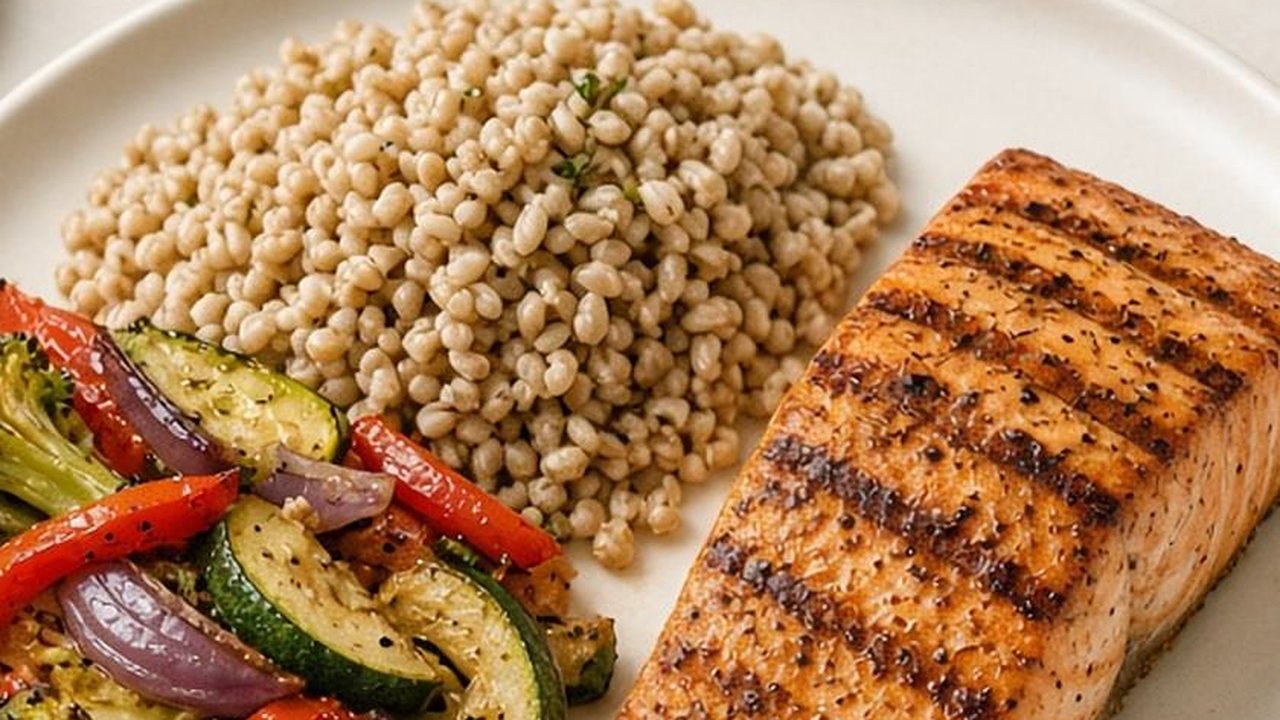
- Build meals around a protein you can point to, a vegetable or fruit, and a carbohydrate you include on purpose—beans, whole grains, potatoes, fruit.
- Choose the higher-fiber version of what you already eat: oats instead of a sugary cereal, a whole-grain tortilla, beans in the soup.
- Keep the timing ordinary. A real first meal and a planned afternoon bridge prevent the long gap that turns dinner into a rescue.
None of that requires deleting bread or fruit. The satisfying plates guide covers the shape in more detail.
The easiest high-value change: drinks
The ADA recommends replacing sugar-sweetened beverages—including juices—with water or low- or no-calorie drinks. Soda, sweet tea, sweetened coffee drinks, and energy drinks deliver a lot of sugar with little fullness. If you drink them daily, one swap is a meaningful place to start. You do not have to give up coffee; you might just change what goes in it.
Movement, sleep, and stress count
Regular movement improves how the body uses insulin. The 150-minute figure can be split however your week allows—short walks after meals are a common, pleasant default. Short sleep and chronic stress also nudge appetite and blood sugar in the wrong direction; the sleep, stress, and appetite guide has gentle starting points.
Myths worth retiring
- “Prediabetes means I will get diabetes.” Not necessarily. The point of the diagnosis is that risk can be lowered.
- “I have to go zero-carb.” Major guidelines emphasize food quality and pattern. Some adults do well reducing carbohydrate with their clinician’s input, but it is not the only path.
- “A cinnamon or chromium supplement will fix it.” The ADA Standards state that micronutrient, herb, or spice supplements such as chromium or cinnamon are not recommended for glycemic benefit.
When to see a clinician or registered dietitian
Ask your clinician about testing if you have risk factors the CDC lists, such as being 45 or older, a parent or sibling with type 2 diabetes, a history of gestational diabetes, or polycystic ovary syndrome. Seek care promptly for unusual thirst, frequent urination, blurred vision, or unexplained weight loss. The ADA recommends referral to a registered dietitian for people with prediabetes; ask whether a CDC-recognized National Diabetes Prevention Program is available near you, including online options.
A short “good enough” check
- Most meals had a protein, a plant, and a carbohydrate I chose on purpose.
- I swapped at least one sugary drink for water or an unsweetened option.
- I moved on most days, even if it was a ten-minute walk after a meal.
- I know my last A1C or fasting glucose, or I have a plan to ask about it.
- I am not trying to fix this with a supplement or a cleanse.
If you can tick most of those, you are doing the things with the best evidence. For daily rhythm, see everyday blood sugar steadiness and fiber, every day.
Sources
- Centers for Disease Control and Prevention (CDC). Prediabetes – Your Chance to Prevent Type 2 Diabetes. https://www.cdc.gov/diabetes/prevention-type-2/prediabetes-prevent-type-2.html
- National Institute of Diabetes and Digestive and Kidney Diseases (NIDDK). Insulin Resistance & Prediabetes. https://www.niddk.nih.gov/health-information/diabetes/overview/what-is-diabetes/prediabetes-insulin-resistance
- NIDDK. Diabetes Prevention Program (DPP). https://www.niddk.nih.gov/about-niddk/research-areas/diabetes/diabetes-prevention-program-dpp
- American Diabetes Association Professional Practice Committee. 5. Facilitating Positive Health Behaviors and Well-being to Improve Health Outcomes: Standards of Care in Diabetes—2026. Diabetes Care 2026;49(Suppl 1). https://diabetesjournals.org/care/article/49/Supplement_1/S89/163932/5-Facilitating-Positive-Health-Behaviors-and-Well
- U.S. Department of Agriculture & U.S. Department of Health and Human Services. Dietary Guidelines for Americans, 2025–2030 (January 2026). https://cdn.realfood.gov/DGA.pdf
You don’t have to figure out prediabetes alone. If something here raised a question, reach out to our RD team, or join the newsletter for more support like this.