Schedules
Eating on a night shift or an irregular schedule
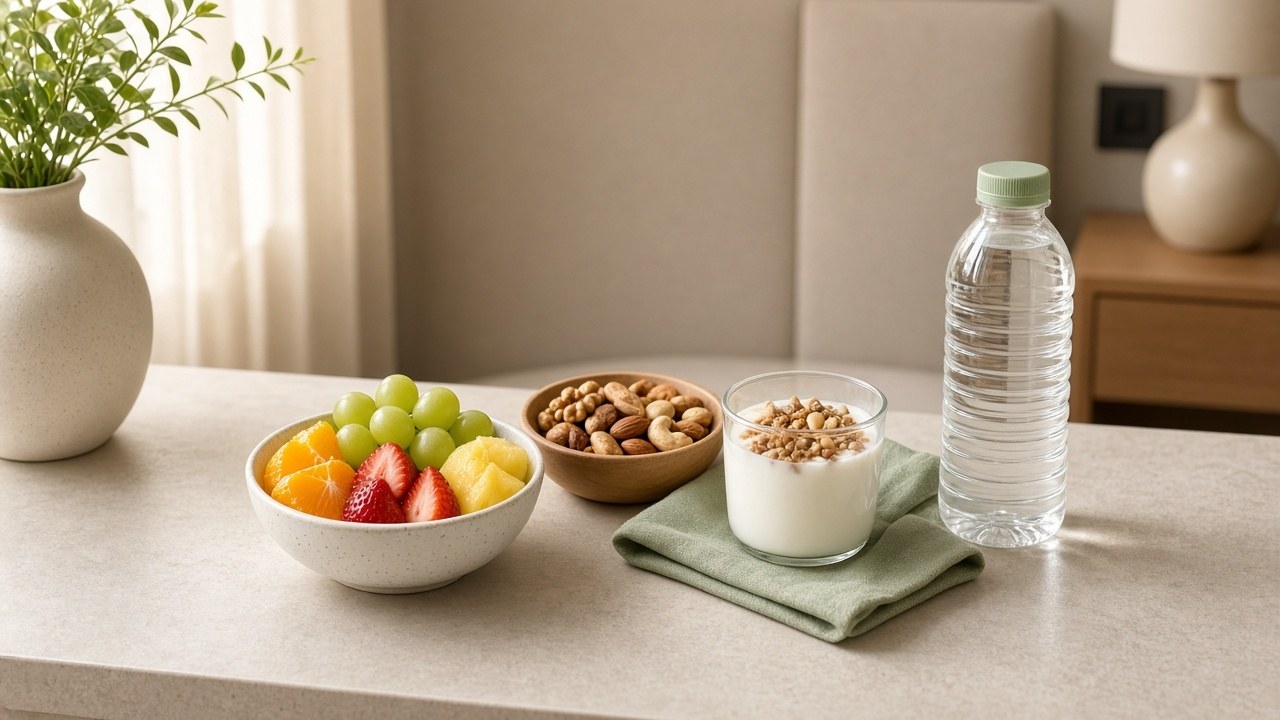
When your workday starts as everyone else’s ends, most nutrition advice simply doesn’t fit, and it’s understandable to feel left out of it.
Shift work does not come with a meal plan that matches a day-shift break room. Your waking hours may start at 6 p.m. Sleep may land at 9 a.m. Advice to “eat breakfast at 7 and close the kitchen at 8” does not describe that life. Forcing it usually means skipping the meal you needed and grazing whatever is upright in a vending machine at 3 a.m.
Your clock is the one you are awake on.
This page is general education from our registered dietitian team. It is not a sleep treatment, a circadian protocol, or medical nutrition therapy. Rotating shifts, diabetes medicines, reflux, and some other conditions change what is safe to try. If a line here conflicts with the clinician who knows your schedule and your chart, follow them. Falling asleep while driving, new chest pain, or a mood that will not lift are medical problems, not a snack problem.
Anchor meals to waking, not to the wall clock
A usable pattern is the same shape as a daytime one, slid onto the hours you are actually up. You do not need a new identity as a night eater. You need a few meals that happen.
- A first meal within a couple of hours of waking, with a protein you can point to. Eggs, yogurt, leftovers, a sandwich, or cereal with milk all count. The first-meal protein idea still applies when “morning” is 5 p.m.
- A planned, moderate meal in the middle of the shift—the overnight lunch below—not a trickle of bites from the start of the shift to the end. NIOSH guidance for night workers suggests keeping food lighter between midnight and 6 a.m. and avoiding a large meal in the 1 to 2 hours before your main sleep.
- Something before sleep if you are hungry. A smaller plate is often more comfortable than a feast you hope will knock you out. Going to bed shaky and underfed is not more disciplined. It often makes the next shift louder.
- Days off can stay loosely familiar. You do not have to flip to a perfect daytime schedule by Saturday noon. Keep a protein-aware first meal after you wake, and let the clock be imperfect.
Rotating schedules are harder than a steady night shift. The educational default is still “meals while you are awake,” not a new app every week. If the rotation is brutal, a registered dietitian who can look at the actual roster is more useful than a generic window.
The overnight “lunch”
Call it lunch even if the sky is dark. It is a meal: protein you can name, a carbohydrate that will carry the next few hours, and a plant if that is easy. Pleasure is allowed. A sad desk is not a safety policy.
- A turkey or tofu sandwich, fruit, and a yogurt.
- Leftovers in a thermos, or a microwave meal that includes protein—not only a pastry.
- A tuna or chicken packet, crackers, and carrots or a piece of fruit.
- Yogurt, granola, and a banana if you have a fridge or a cold pack.
- Beans and rice from earlier in the week, if that is what you cook. Weeknight dinners and light meal prep are for the meal you pack, not for a second job.
Grazing chips for six hours is not the same as eating. It is also not a moral failure if that is what happened on a short-staffed night. The next shift can have a packed meal. One rough night does not require a Monday reset. The afternoon bridge is the same idea in the middle of a long stretch: a planned snack so the last hours are not a raid.
Portable protein that survives a locker
If you cannot picture the protein, the meal will not happen. Stock a short list you will actually carry.
- No fridge: nuts, roasted chickpeas, jerky, cheese that can sit a few hours, peanut butter, a protein bar used as food rather than as a personality, shelf-stable milk or soy milk, tuna or chicken packets.
- Fridge or cooler: yogurt, cottage cheese, string cheese, leftovers, a sandwich, hummus.
- Gas station reality: milk, a sandwich, nuts, cheese, fruit that looks decent. You do not need a perfect macro split under fluorescent lights.
Pack it before you are tired. Decision-making at hour ten is a poor chef. A grocery default that includes two portable proteins is the whole system.
Caffeine, with a cutoff that protects sleep
Caffeine can make a night safer and more tolerable. It is not a meal, and it is not a substitute for the lunch you skipped. Coffee and tea still count as fluid for most people; that part lives in hydration myths.
- Many people sleep better when caffeine stops several hours before the sleep they are trying to protect. There is no single clock time that fits every body. If you are still wired when you get home, try an earlier last cup for a week. That is an experiment, not a new identity as someone who quit coffee.
- Energy drinks stacked on an empty stomach are a jittery crash. If you want one, put food with it.
- Alcohol to “come down” after a shift often makes the sleep worse, then makes the next appetite louder. We will not invent a safe amount. The calm frame is in alcohol, caffeine, and “is this fine?”.
Food is not a sleep cure
A heavy, greasy plate right before daytime sleep can be uncomfortable, especially if reflux is already in the picture—see reflux and food timing for comfort ideas, not a treatment. A day with almost no food can also make sleep fragile and the next shift ravenous. Neither extreme fixes a circadian mismatch.
Dark, cool, and as consistent as your roster allows will do more for sleep than a special tea or a supplement stack. Short sleep still changes appetite; sleep, stress, and appetite is the daytime version of that biology, and it applies when your night is other people’s afternoon. This page will not treat shift-work sleep disorder. If sleep is unsafe or miserable, a clinician is the next step—not a stricter eating window.
A short “good enough” check
- I ate a first meal after I woke, with a protein I can name.
- The middle of the shift had a real lunch, not only leftover bites.
- Something portable was in the bag before I was too tired to decide.
- Caffeine stopped early enough that sleep had a chance—or I am testing an earlier cutoff, not a ban.
- I did not use a huge meal, a fast, or alcohol as a sleep treatment.
- A rough shift did not become a story that the next day has to punish.
If you can tick most of those, the schedule was fed. It will not turn nights into days. It will keep hunger from being one more thing the shift takes.
The newsletter is a short note—not a reboot—and consulting is there if you want a registered dietitian to look at a real roster with you.
Sources
- CDC. About Sleep. https://www.cdc.gov/sleep/about/index.html
- CDC/NIOSH. Training for Nurses on Shift Work and Long Work Hours, Module 9: Diet Suggestions for Night-Shift Nurses. https://www.cdc.gov/niosh/work-hour-training-for-nurses/longhours/mod9/08.html
- NHLBI. Sleep Deprivation and Deficiency. https://www.nhlbi.nih.gov/health/sleep-deprivation
- U.S. Department of Agriculture & U.S. Department of Health and Human Services. Dietary Guidelines for Americans, 2025–2030 (January 2026). https://cdn.realfood.gov/DGA.pdf
Still have questions about shift-work eating? Our RD team would be glad to hear from you: send us a note, or join the newsletter for calm, practical ideas in your inbox.