Cues
Stress and emotional eating, without the shame spiral
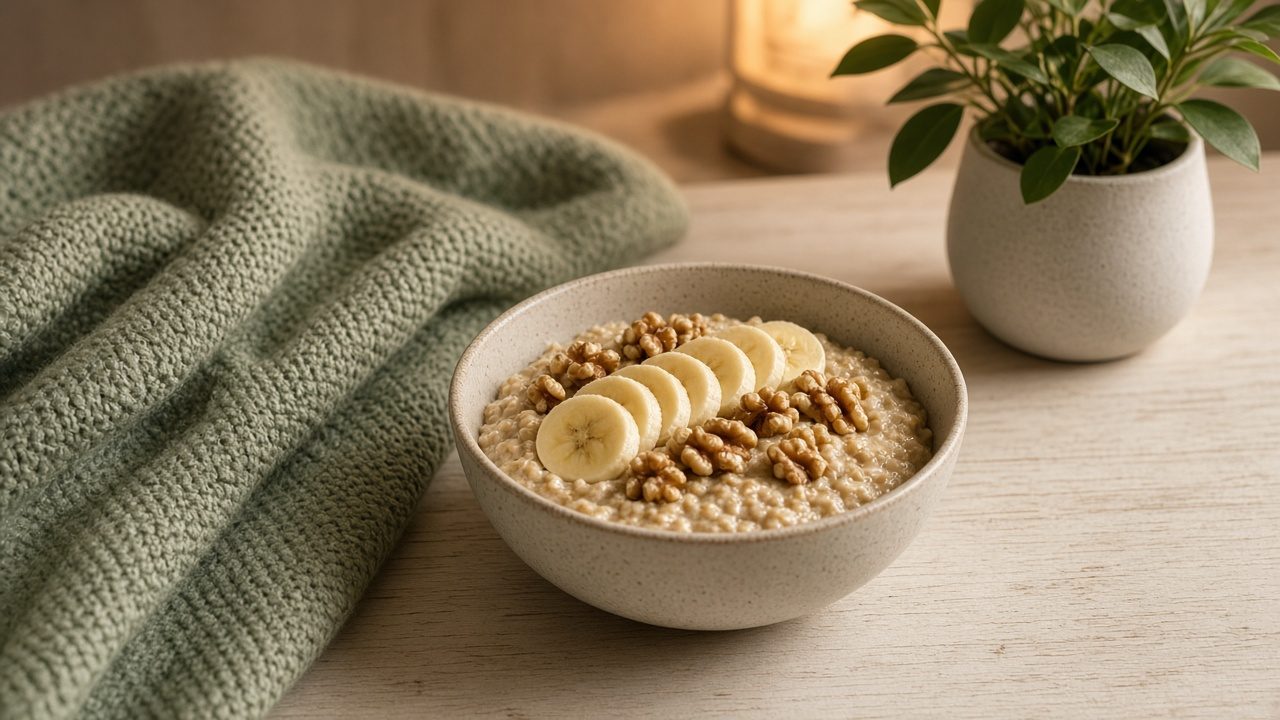
If you’ve ever reached for food after a hard day and then felt worse about it, you’re not broken. Eating for comfort is a very human response.
You had a hard day, and then you ate the thing that was easy, sweet, salty, or all three. Maybe you were not even hungry in the way lunch is hungry. Afterward the story started: you have no discipline, you ruined the day, tomorrow must be a penance. That story does more damage than the food.
The story after the snack does more damage than the snack.
Stress eating and emotional eating are common human patterns, not a personality defect. Food is soothing. It is fast. It is legal and nearby. Our RD team’s job on this page is to take the shame out of the loop and leave you with a few defaults that make the loop smaller—not to turn you into someone who never eats for comfort.
What is actually happening
Stress, short sleep, and a long underfed stretch share a result: the brain looks for quick energy and quick relief. The sleep, stress, and appetite guide is the physiology in plain language. Emotional eating is the same neighborhood. Loneliness, boredom, anger, numbness, and celebration can all point at the pantry. Wanting food when you want comfort does not mean you are broken. It means food works, a little, and it is available.
Restriction makes the pull stronger. If the day was built on “being good”—skipped breakfast, a tiny lunch, rules about what you are allowed to want—the evening is not a mystery. The body is catching up, and the rules are making the catch-up feel like a crime. That is the spiral. The food is only the middle of it.
Feed the day before you audit the feeling
The least dramatic help is also the most reliable: do not arrive at the hard feeling from empty.
- A first meal with protein, even a small one.
- A midday plate with protein, a starch, and a plant—see satisfying plates.
- An afternoon bridge if dinner is far away, so the first bite at home is not a free fall.
This is not “eat so you never have feelings.” It is “do not ask willpower to do a job that lunch should have done.” People still eat for comfort on well-fed days. They just do it with more room to choose, and with less of the shaky urgency that feels like it has to be everything in the cabinet.
Comfort can be included on purpose
You are allowed to eat for reasons other than nutrient targets. A cookie after a brutal meeting can be the plan. Ice cream on the couch can be the plan. Putting the food on a plate or in a bowl, sitting down, and letting it be the thing you wanted—rather than eating over the sink while prosecuting yourself—often changes the amount, and it always changes the aftermath.
A few questions that are curious, not cross-examinations:
- Am I hungry for a meal, or do I want relief?
- If I want relief, what food would actually do that—versus whatever is open?
- Have I eaten a real meal in the last several hours?
- Is there a non-food pause that might help for ten minutes: a walk, a shower, a text, leaving the kitchen? If not, eat the food you chose. The pause is an option, not a test you fail.
If the pause becomes another rule—“I must journal before I deserve a snack”—drop it. Rules are how this gets worse.
The next meal is the whole repair
After a stress-eating episode, the useful move is almost boring. Eat the next meal at the next mealtime. Include protein. Do not skip breakfast to “balance” tonight. Do not start a cleanse on Monday. Do not hide the evidence and call that accountability. Continuity ends the spiral. Punishment extends it.
You can note what was going on—deadline, argument, no lunch, three hours of sleep—without writing a character indictment. Patterns are information. “I always do this when I skip lunch” is more useful than “I always fail.” If evenings are the loud time, plan a satisfying dinner and, if you want it, a deliberate sweet. Planned is calmer than prohibited.
When food is doing a job that needs more help
Sometimes eating is the only tool left, and it is starting to scare you: you feel out of control, you hide food, you cannot stop when you want to, or you compensate afterward by restricting, purging, or overexercising. That is beyond a blog post. A physician, a therapist, or a dietitian who works with eating disorders can help, and sooner is kinder than white-knuckling. This guide is education about ordinary stress eating. It is not treatment, and it is not a diagnosis.
If stress itself is constant—panic, hopelessness, not sleeping, not functioning—food tips will not be enough. Please talk with a clinician. In the U.S., the 988 Suicide and Crisis Lifeline is available by call or text at 988 if you are in crisis. We would rather you get care than optimize a snack.
A short “good enough” check
- I ate meals today, or I can see that I did not—and I am not calling that a moral failure.
- If I ate for comfort, I can name it without a shame speech.
- The food was something I actually wanted, as much as the moment allowed.
- I am not skipping the next meal to pay for this one.
- I have one non-food support I can try next time, and I am allowed not to use it.
- If eating feels out of control or unsafe, I know this page is not the right level of help.
If you can tick most of those, you stepped out of the spiral. That is the skill. It will not guarantee a weight outcome. It will make the next hard day less expensive.
Pair this with weekend anchors if the loop clusters on Saturday night, and with eating out if restaurants are where the “I ruined it” story starts. The paid guides add worksheets on everyday structure, not on shame. The newsletter is a short note—not a reboot.
Sources
- 988 Suicide & Crisis Lifeline. https://988lifeline.org/
- NIMH. Eating Disorders. https://www.nimh.nih.gov/health/topics/eating-disorders
- National Institute of Mental Health (NIMH). I’m So Stressed Out! Fact Sheet. https://www.nimh.nih.gov/health/publications/so-stressed-out-fact-sheet
Still have questions about stress or emotional eating? Our RD team would be glad to hear from you: send us a note, or join the newsletter for calm, practical ideas in your inbox.