Heart
Heart-friendly plates in plain English
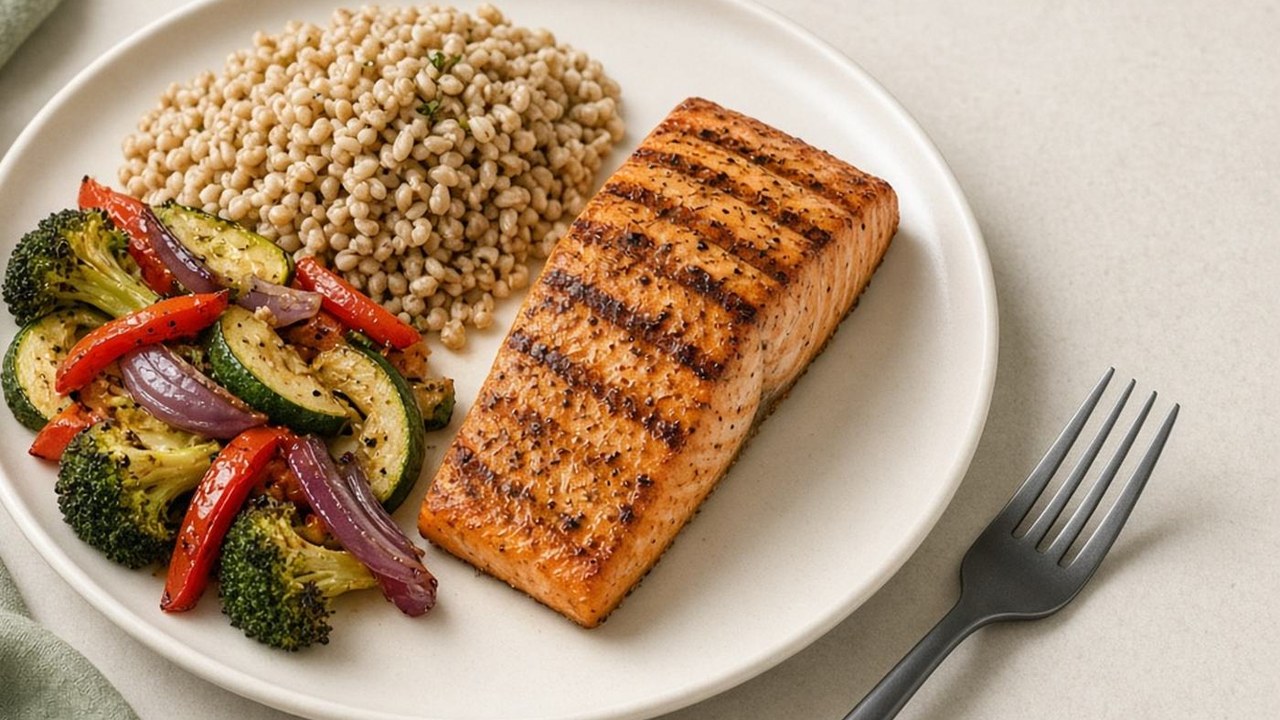
If heart health has moved up your list, whether after a checkup or because of family history, it’s natural to wonder how much of your plate has to change.
Heart advice on the internet tends to arrive as a ban list: no salt, no fat, no pleasure, and a spreadsheet of milligrams. Most people do not cook that way, and shame is a poor seasoning. A heart-friendly plate, in the way our RD team teaches it, is still a meal you would eat on a Wednesday—more plants and fiber, a lighter hand with sodium you did not mean to add, and fats chosen without mythology.
Shame is a poor seasoning.
This is education, not a prescribed cardiac diet. We are not setting cholesterol targets, sodium limits, or medication plans. If you have heart disease, high blood pressure, heart failure, or a clinician’s instruction that conflicts with a general article, follow your care team. Bring this page as a conversation starter, not as orders.
The plate is still a plate
Start from satisfying plates: protein you can point to, plants, a starch you like, and enough pleasure that the meal feels finished. Heart-friendly eating is mostly a shift in emphasis inside that shape, not a separate identity.
- Plants at the meal, not as a weekend project: vegetables, fruit, beans, lentils, oats.
- Protein from foods you already cook: fish, beans, tofu, yogurt, eggs, poultry, or leaner cuts when you like them. Red meat can stay in rotation. It does not have to be daily by default, and it does not have to be banished.
- A carbohydrate with some fiber when that is easy: oats, beans, potatoes with the skin, whole-grain bread if you like it. White rice with beans and vegetables is still a respectable plate.
If the “heart-healthy” version is dry chicken and plain broccoli you will not finish, it is not friendly. Olive oil, herbs, citrus, a sauce you like in a reasonable amount, and cheese that makes the vegetables disappear all count as cooking. Austerity is not a nutrient.
Sodium, without a milligram hobby
Most of the sodium in many people’s weeks comes from restaurant meals, deli and cured meats, bread and rolls, canned soups, sauces, and packaged snacks—not from the salt shaker at a home-cooked plate. You do not need to memorize a daily cap from a website to use that fact.
Practical defaults, if you want them:
- Cook a simple meal often enough that takeout is a choice, not the only option. Weeknight dinners are built for that.
- Taste before you salt. Acid (lemon, vinegar) and herbs do some of the work salt was doing.
- Compare labels when two products are otherwise the same—store-brand beans, tomatoes, broth—and pick the one that is lower if the price is fine. Rinsing canned beans cuts some of the sodium in the liquid. This is a nudge, not a law.
- Treat soy sauce, bouillon, pickles, and “flavor packets” as the salty part of the meal, and ease off adding more on top.
A salty restaurant meal does not ruin a pattern. The next home plate can be ordinary. People with heart failure, kidney disease, or a prescribed sodium limit need their clinician’s number, not this paragraph. Do not invent a stricter rule to feel virtuous, and do not ignore a limit you were given.
Fiber is the unsung part
Soluble fiber from oats, barley, beans, lentils, fruit, and some vegetables is one of the more useful everyday tools for heart health that also makes meals more filling. You do not need a fiber supplement to begin. You need a few foods you will repeat. The gut comfort guide covers how to increase fiber without a miserable week: gradually, with fluids, in forms you tolerate.
A bowl of oatmeal with fruit and nuts, beans in the taco, or lentil soup with bread are heart-friendly because they are meals, not because they are joyless. Plant-forward plates are the longer version of “more of these foods,” without requiring you to become a different person.
Fat myths that waste energy
Fat is not a single substance, and “low-fat” on a package is not a health plan. A few plain-language distinctions:
- Unsaturated fats from olive oil, nuts, seeds, avocado, and fish fit easily into ordinary cooking. They are not something you have to earn.
- Very low-fat eating often leaves meals unsatisfying, and the replacement is frequently refined starch or sugar. Hungry people do not stick with the plan.
- Trans fats in older stick margarines and some fried packaged foods are the type worth minimizing. You can do that by cooking more of your own food and not making deep-fried leftovers a personality. You do not need to fear the olive oil on vegetables.
- Butter, cheese, and meat can live in a week that also has beans, fish, and plants. Frequency and the rest of the plate matter more than a single ingredient trial.
- Coconut oil is not a miracle, and it is not poison. It is one fat among many. Marketing is louder than the nutrition.
We are not telling you your LDL number, and we are not telling you to stop a statin or start one. Lipid results and medicines belong with your clinician. Food pattern is the part you can practice between visits.
What we are not asking you to do
- Replace meals with a juice, a cleanse, or a supplement stack marketed for arteries.
- Cut all sodium overnight if you were not given a clinical limit—food will taste punishing, and you will bounce.
- Skip eating out forever. Use eating out: a protein, a plant if it is easy, pleasure included, and a normal next meal.
- Treat a birthday cake as cardiac damage. Pattern over months is the educational frame. One dessert is a dessert.
A short “good enough” check
- The plate had plants or beans, not only a protein and a refined starch.
- I can name the salty foods that show up often—and I nudged one, without policing the salt shaker at every bite.
- Fat came mostly from foods I cook with, not from a fear of every oil.
- The meal was satisfying enough that I am not planning a second dinner of crackers.
- I did not change a medication, and I am not using this page as a cholesterol target.
- A richer meal, if it happened, did not cancel the week.
If you can tick most of those, the plate was friendly enough. It will not guarantee a blood pressure or lipid result. It will make the pattern livable.
Shop for it with grocery defaults or, if money is the constraint, budget groceries. The paid guides add worksheets in the same voice, and the newsletter is a short note—not a reboot.
Sources
- American Heart Association. How Much Sodium Should I Eat Per Day? https://www.heart.org/en/healthy-living/healthy-eating/eat-smart/sodium/how-much-sodium-should-i-eat-per-day
- American Heart Association. Saturated Fats. https://www.heart.org/en/healthy-living/healthy-eating/eat-smart/fats/saturated-fats
- NHLBI. Heart-Healthy Living: Choose Heart-Healthy Foods. https://www.nhlbi.nih.gov/health/heart-healthy-living/healthy-foods
- U.S. Department of Agriculture & U.S. Department of Health and Human Services. Dietary Guidelines for Americans, 2025–2030 (January 2026). https://cdn.realfood.gov/DGA.pdf
You don’t have to figure out heart-friendly eating alone. If something here raised a question, reach out to our RD team, or join the newsletter for more support like this.