Plants
Plant-forward, without perfection
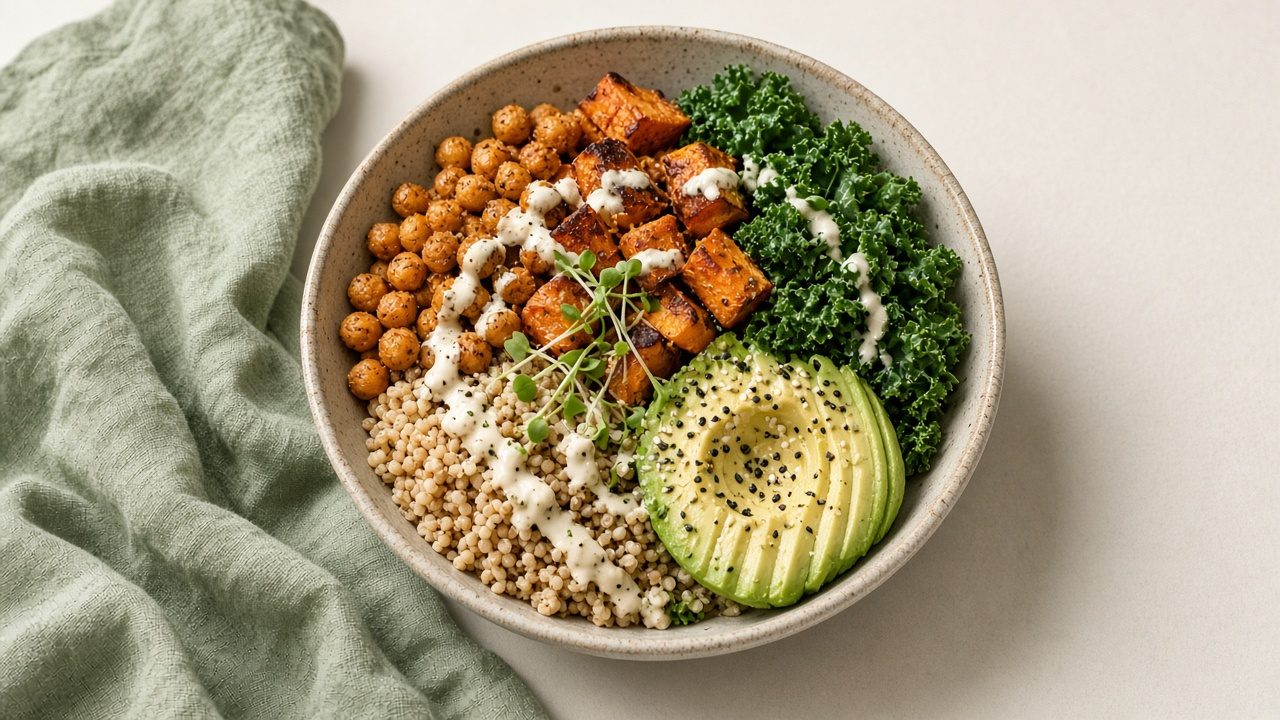
If you’d like to eat more plants but don’t want to give up foods you love, or you’re worried about getting enough protein, you don’t have to choose between all or nothing.
Plant-forward means more of the meal comes from plants—vegetables, fruit, beans, lentils, grains, nuts, seeds—while animal foods can stay in the week if you want them. It does not mean a perfect vegan month, a new identity, or a moral score for every egg. Our RD team likes this frame because it is a direction, not a cliff.
More of the meal from plants. No purity test.
All-or-nothing plant eating usually looks the same: a virtuous Monday, a hungry Wednesday, and a Friday that feels like failure because dinner included cheese. The cheese was never the emergency. The emergency was a plan that only works if you become a different person.
More plants, same plate shape
Use the satisfying plate you already know. Shift the proportions before you shift your whole shopping list.
- Add a plant to a meal you already make: frozen spinach in eggs, a handful of greens beside the sandwich, beans in the rice, fruit with breakfast.
- Let beans or lentils be the protein sometimes, not only a side you feel you should want. Chili, lentil soup, hummus with a real amount of bread, tofu you season like you mean it.
- Keep a dinner that includes fish, eggs, yogurt, or meat if that is what makes the pattern stick. A plate with chicken and two vegetables is plant-forward enough for a Tuesday.
Half the plate as plants is a picture that helps some people and intimidates others. If half feels like a performance, start with one plant you will finish. Finished beats photographed.
Protein still has to be findable
The reason some plant-based experiments leave people exhausted and snacky is not a lack of virtue. It is a plate of grains and salad dressing with almost no protein. Beans, lentils, tofu, tempeh, edamame, soy milk, eggs, dairy, fish, and meat all count. Nuts and seeds help, and they are easy to over-rely on because they are portable; they are not a full stand-in for a protein at every meal.
If you are moving away from animal foods, do it one meal at a time and check that you can name the protein. “Vegetables and toast” is not a personality. It is an underfed breakfast. The first-meal protein guide still applies: yogurt, eggs, tofu, or peanut butter plus soy milk and oats—something you can point to.
We are not setting a gram target on this page, and we are not declaring animal protein unsafe. People who do not eat animal foods at all should know that vitamin B12 is not optional over the long run; a reliable source (fortified foods or a supplement your clinician agrees with) matters. Iron, calcium, and iodine are worth a conversation if your pattern is fully vegetarian or vegan and you are tired, pregnant, or feeding kids. That conversation is personal. This article will not invent your supplement list.
Fiber, comfort, and the overeager week
Doubling beans and raw salads overnight is how people decide they “cannot eat plants.” Gas, bloating, and a sullen gut are often a pace problem. Increase gradually, cook vegetables you find easier than giant raw bowls, rinse canned beans, and drink fluids. Gut comfort basics is the companion, not a detox. Canned and frozen plants count. They are not a lesser moral category than farmers-market kale.
Convenience is allowed
Plant-forward eating fails when it requires soaking, specialty products, and a free Sunday. Defaults that survive real weeks:
- Canned beans and lentils, jarred sauce, frozen vegetables, frozen edamame or shrimp, eggs, tortillas, oats, peanut butter, fruit that lasts, yogurt.
- A weeknight shape: bean tacos, eggs and frozen vegetables with toast, tofu or chicken stirred into rice and a bag of vegetables, lentil soup you repeat.
- Eating out without a speech. Many menus have a bean, tofu, fish, or vegetable side. You can also order the dish you wanted and add a plant. See eating out. You do not owe the table an explanation.
Meat alternatives can be useful, expensive, or very salty. They are optional tools, not a requirement for being plant-forward. A can of chickpeas is a legitimate protein.
Perfection is the trap
You do not need a meatless streak to “make it count.” You do not need to announce the project. You do not need to replace family meals with a separate virtuous plate—especially with kids, which is the point of picky eating, without food fights. Serve food. Include plants. Let people, including you, be uneven.
A week that includes several meals with beans or extra vegetables, plus ordinary dinners that include animal foods, is a success. A week that was going to be fully vegan and collapsed on Wednesday is not a confession. Eat Thursday.
A short “good enough” check
- I added plants to meals I already eat, instead of inventing a new personality.
- I can point to a protein at the meals that matter, plant or animal.
- Fiber went up at a pace my gut can tolerate.
- Frozen, canned, or leftover plants counted.
- An animal food, if I ate one, did not erase the plants I also ate.
- I am not using this as a purity test or a weight guarantee.
If you can tick most of those, you are plant-forward enough. Keep going with heart-friendly plates and grocery defaults. The paid guides add worksheets in the same voice, and the newsletter is a short note—not a reboot.
Sources
- Academy of Nutrition and Dietetics. Vegetarian Dietary Patterns for Adults: A Position Paper of the Academy of Nutrition and Dietetics. J Acad Nutr Diet. 2025 (PubMed 41474402). https://pubmed.ncbi.nlm.nih.gov/41474402/
- NIH ODS. Vitamin B12: Fact Sheet for Consumers. https://ods.od.nih.gov/factsheets/VitaminB12-Consumer/
- U.S. Department of Agriculture & U.S. Department of Health and Human Services. Dietary Guidelines for Americans, 2025–2030 (January 2026). https://cdn.realfood.gov/DGA.pdf
Wherever you are with plant-forward eating, small steps count. If you’d like a hand, tell our RD team what’s going on, or join the newsletter to keep learning with us.