Patterns
Ultra-processed food, without all-or-nothing
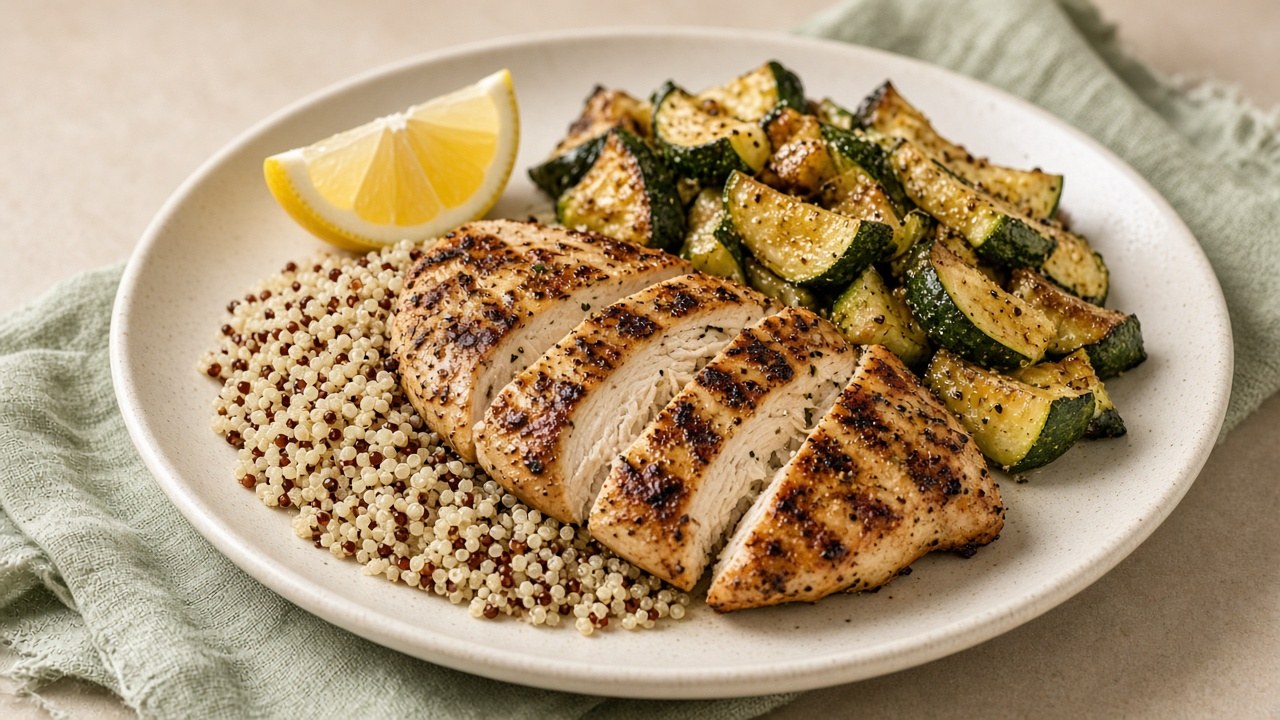
If headlines about ultra-processed food have you feeling guilty about every packaged item in your pantry, take a breath. Real life includes convenience food.
“Ultra-processed” has become a moral category. A cracker, a yogurt cup, and a fast-food dinner get the same label, and then the only acceptable response is to cook everything from ingredients you could have owned in 1850. Most adults do not have that week. Many of the foods that make a steady plate possible come in a package.
A label is not a reason to purge the pantry.
This page is general education from our registered dietitian team. It is not a ban list, a Nova-classification assignment for your cart, or medical nutrition therapy. If fear of packaged food is shrinking what you eat, that is a different problem than “too many snacks,” and it belongs with a clinician who knows eating disorders—not with a stricter rule.
What the phrase is pointing at
Researchers use “ultra-processed” for foods built mostly from refined ingredients plus additives that make them very easy to eat quickly: many sweet drinks, chips, candy, instant noodles as the whole meal, reconstituted meat snacks, and a lot of foods marketed as breakfast that are closer to dessert. The research conversation is about patterns across a week, not about whether one granola bar is toxic.
The useful observation, stripped of the scare, is this: a day built mostly from foods engineered to be eaten fast, with little protein and little fiber, often leaves people unsatisfied. They eat again soon. That is a plate problem. It is not proof that the person is weak, and it is not proof that the freezer aisle is poison.
You do not need to memorize a classification system to eat. If a food has a protein you can point to, a plant or a fiber, and a place in a meal you actually sit down for, it is already doing more than a purity test. Satisfying plates is that idea without the jargon.
Processed is not the villain
Cooking is processing. Freezing, canning, pasteurizing, and baking are processing. A lot of foods people are told to fear are the reason a tired Tuesday still has dinner:
- Canned beans, tomatoes, and fish.
- Frozen vegetables, frozen fruit, and a bag of rice or oats.
- Plain yogurt, milk, tofu, cheese, eggs, and bread.
- Peanut butter, tortillas, pasta, and a sauce you will actually use.
- A rotisserie chicken on the night you will not cook.
Those are grocery defaults, not a failure of character. The grocery defaults and budget groceries guides assume packages on purpose. A tight budget and a short evening get worse, not better, if the only legal food is the one you soaked overnight.
Fortified foods are sometimes the practical source of a nutrient—iodized salt, fortified plant milks, breakfast cereal that is not the whole diet. “Nothing from a package” can accidentally drop those. If you are pregnant, feeding children, or eating mostly plants, that is a reason to be specific, not a reason to panic. The plant-forward guide keeps animal foods optional and protein non-negotiable.
The pattern that wears people out
What tends to unravel a week is not the existence of a packaged food. It is when ultra-processed items quietly become the structure:
- Sweet drinks replacing meals, or replacing water all afternoon.
- Snacks that are easy and salty or sweet, with no protein, standing in for lunch.
- A “healthy” packaged bar that is mostly marketing, eaten instead of breakfast, then a crash. Pair it with yogurt or keep it for a day you truly need a shelf-stable backup—not as an identity.
- Eating from the package in the car or at the laptop, so fullness never quite registers. That is a pace problem. It shows up with homemade food too.
A calmer shift is addition, not a purge. Keep the convenient food if you like it, and put a protein and a plant next to it. Chips beside a sandwich is a different afternoon from chips as the afternoon. A frozen meal with a piece of fruit and a glass of milk is dinner. It does not need to be apologized for.
Kids run into this as a character story—“they only eat junk”—when the real scene is a long gap, a practice, and a cupboard of foods nobody planned. Packed snacks can be part of a normal lunch. Pressure and separate diet plates do not fix it. Picky eating and sports fueling are the family versions.
All-or-nothing is the expensive plan
Throwing out the pantry, shopping only the perimeter, and promising “no processed food this month” usually lasts until a hard day. Then the rebound is louder, and the story becomes “I can’t be trusted.” That is the same spiral as any other reboot. Stress eating is what the hard day actually needs: a meal, not a new identity.
You also do not have to home-cook to be a person who eats well. Restaurants and takeout are allowed to be the plan. See eating out. A week that includes a frozen pizza, a bean bowl, and a restaurant meal can still be a steady week if protein and plants show up more often than not.
If you want one experiment, make it small: at one daily eating moment that is currently only a packaged snack, add a protein you already buy. Do that for a week. Do not audit every ingredient list. Ingredient lists are for allergies, sodium you have been told to watch, and curiosity. They are not a score.
When food fear is the actual issue
A growing list of “unclean” ingredients, social events you skip because you cannot control the kitchen, or panic about a single additive is not a wellness win. It can be how disordered eating disguises itself as being informed. You do not have to diagnose that from a guide. You do get to loosen the rule and talk to someone trained in eating disorders if food is taking up more of your mind than your life.
Medical diets exist—celiac disease, a true allergy, a sodium limit from a clinician. Those are specific. They are not a reason for everyone else to treat a preservative as an emergency. Do not start an elimination diet from a headline about processing.
A short “good enough” check
- Packaged foods that make meals happen were allowed to stay.
- Most eating moments had a protein I could point to, not only a snack engineered to disappear.
- I added a plant or a fiber somewhere, instead of banning a category.
- A convenience meal counted as dinner, not as evidence I failed.
- I did not use “ultra-processed” as a moral grade for myself or a child.
- If the rule is shrinking my life, I treat that as a reason to get help, not to purify harder.
If you can tick most of those, the week was handled. It will not guarantee a lab result or a weight outcome. It will keep an ordinary cracker from becoming a referendum.
Related pieces: satisfying plates, grocery defaults, and budget groceries. The newsletter is a short note—not a reboot.
Sources
- FDA. Added Sugars on the Nutrition Facts Label. https://www.fda.gov/food/nutrition-facts-label/added-sugars-nutrition-facts-label
- FDA. How to Understand and Use the Nutrition Facts Label. https://www.fda.gov/food/nutrition-facts-label/how-understand-and-use-nutrition-facts-label
- U.S. Department of Agriculture & U.S. Department of Health and Human Services. Dietary Guidelines for Americans, 2025–2030 (January 2026). https://cdn.realfood.gov/DGA.pdf
You don’t have to figure out ultra-processed food alone. If something here raised a question, reach out to our RD team, or join the newsletter for more support like this.